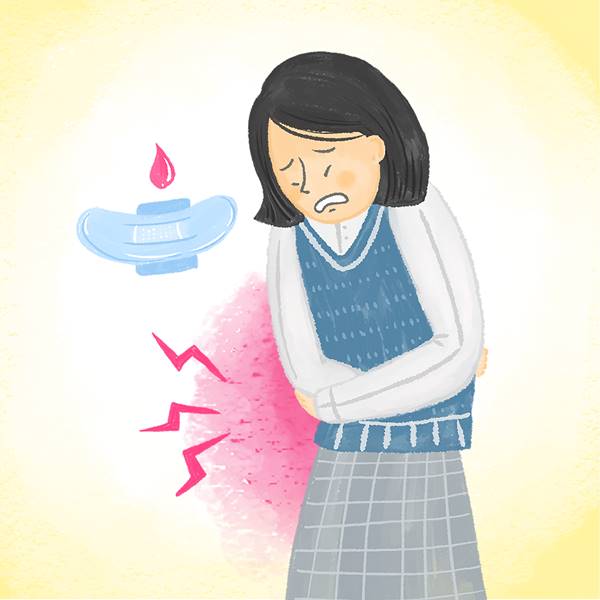
Meaningful Bleeding: Your Menstrual Phase
Why do we have periods every month, even though they can feel inconvenient? Every change in our body has a purpose. The menstrual phase is the time from the start of your period until it ends. In medical terms, menstruation is uterine bleeding that occurs when progesterone levels suddenly drop. Progesterone is one of the hormones produced by the ovaries. But why does it decrease during this phase? The egg and the cells surrounding it are called a follicle. After ovulation, the follicle becomes a structure called the corpus luteum, which produces progesterone. If pregnancy does not occur, the corpus luteum gradually breaks down and stops functioning, causing progesterone levels to fall. So why does bleeding happen? The blood you see during your period comes from the shedding of the uterine lining (endometrium). Progesterone helps maintain this lining, so when its levels drop, the lining breaks down and is shed through menstrual bleeding. The menstrual flow contains both endometrial tissue and blood from small blood vessels. Although periods can sometimes feel bothersome, they are also a sign that your body is functioning as intended. Reviewed by Dr. Seongil Choo, Obstetrics and Gynecology Specialist, Seoul Boramae Medical Center.